
Table of Contents
Introduction
Roughly 1.45% of every dollar spent on a U.S. credit card flows back to cardholders in the form of rewards, according to economic research drawing on Federal Reserve interchange data. For cash back cards specifically, that return shows up directly in a cardholder’s account as cash, a statement credit, or a bank deposit rather than as travel points that need converting. Cash back cards are now one of the most common rewards structures issued by U.S. banks, and they range from simple flat-rate cards to programs with quarterly rotating bonus categories.
This guide breaks down the mechanics behind cash back credit cards: how the rewards are actually funded, the three structural types in the U.S. market, how redemption works across major issuers, and the federal rules that govern how these programs can be marketed and administered. Real card examples are used throughout to illustrate how the math works in practice. All figures reflect publicly available terms as of the last-updated date above and are subject to change by each issuer.
Foundation: What “Cash Back” Actually Means
Cash back is a form of credit card rewards that returns a percentage of a cardholder’s spending in actual currency rather than points, miles, or merchandise. When a cardholder pays for a qualifying purchase, the card issuer applies an agreed-upon rate, often shown as a percentage, and credits that amount to the cardholder’s rewards balance. The most common rates range from 1% to 5%, depending on the spending category and the card’s structure.
Card issuers can afford to pay cash back because of how the underlying payment network operates. Every time a card is swiped, tapped, or entered online, the merchant’s bank pays an interchange fee to the cardholder’s bank. According to Federal Reserve interchange data, this fee on credit transactions generally runs higher than on debit transactions and varies by card type, with rewards cards typically carrying a higher interchange rate than no-frills cards. A portion of that fee revenue is what funds the cash back, points, and miles that issuers advertise. This is also why merchants sometimes treat cash and card payments differently, and why the broader interchange-fee structure has drawn attention from federal regulators and Congress over the years.
The Three Structural Types of Cash Back Cards
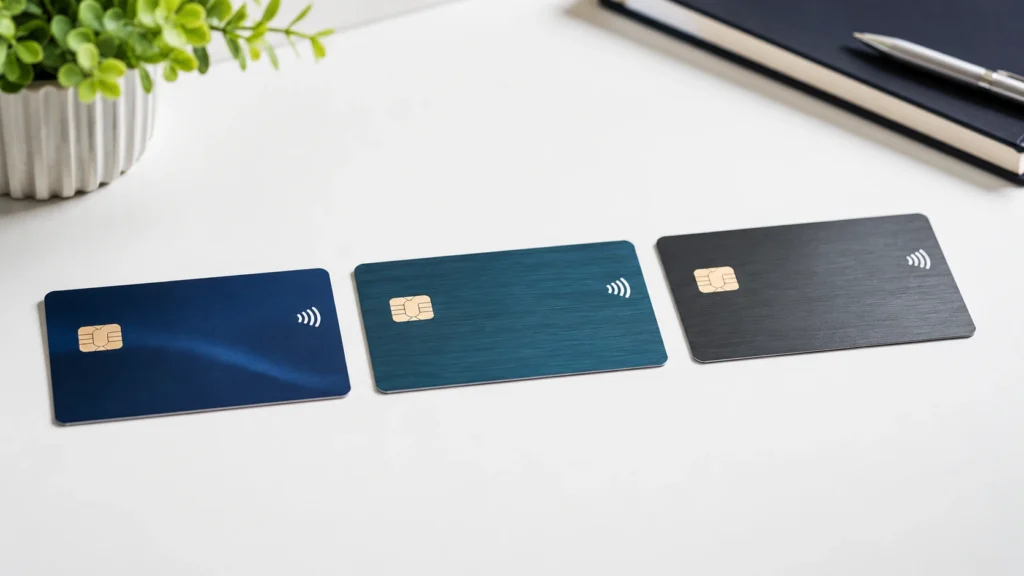
U.S. cash back cards generally fall into three categories based on how the reward rate is determined: flat-rate, tiered (also called fixed-category), and rotating-category. Many cardholders carry more than one type to cover different parts of their spending.
Flat-Rate Cash Back Cards
A flat-rate card pays the same percentage on virtually every purchase, regardless of merchant or category. This structure requires no tracking, no activation, and no spending caps in most cases.
- The Citi Double Cash® Card earns 2% total on most purchases, split into 1% when the purchase is made and an additional 1% as the purchase is paid off, with no annual fee.
- The Capital One Quicksilver Cash Rewards Credit Card earns a flat 1.5% on every purchase, with no annual fee and no foreign transaction fee, plus an elevated rate on hotels, vacation rentals, and rental cars booked through the issuer’s travel portal.
- The Wells Fargo Active Cash® Card earns an unlimited flat 2% on purchases with no annual fee.
Flat-rate cards tend to suit spending patterns that are spread fairly evenly across many categories, since there is no bonus category to optimize around.
Tiered (Fixed-Category) Cash Back Cards
Tiered cards pay a higher rate in specific, pre-set categories and a lower flat rate on everything else. The categories do not rotate, but they may have quarterly or annual spending caps on the bonus rate.
- The Chase Freedom Unlimited® earns 1.5% on general purchases, 3% at restaurants and drugstores, and 5% on travel booked through the issuer’s travel portal.
- The Bank of America® Customized Cash Rewards card lets a cardholder choose one bonus category (such as gas, online shopping, dining, or home improvement) for 3% cash back, plus 2% at grocery stores and wholesale clubs, on a combined $2,500 in quarterly spending across those two categories, with 1% on all other purchases.
- The Citi Custom Cash® Card automatically applies a 5% rate to whichever eligible category a cardholder spends the most in during a billing cycle, up to the first $500 spent, with 1% after that and on all other purchases. No manual selection or activation is required.
Rotating-Category Cash Back Cards
Rotating cards offer an elevated rate, often 5%, in categories that change every quarter and typically require activation.
- The Discover it® Cash Back card pays 5% cash back on up to $1,500 in combined purchases in categories that rotate quarterly, after the cardholder activates the offer, with 1% on amounts above that cap and on all other spending. For the third quarter of 2026 (July through September), the published categories include gas stations, EV charging, public transportation, flights, and drugstores; the second quarter of 2026 covered restaurants and home improvement stores. Discover does not apply the 5% rate retroactively to purchases made before activation.
- New Discover it Cash Back cardholders also receive a one-time dollar-for-dollar match of all cash back earned during the first 12 billing periods, effectively doubling first-year rewards on activated spending.
Rotating cards generally produce the highest ceiling rate of the three structures but require the most ongoing attention, since missing an activation deadline means losing that quarter’s bonus rate entirely.
How Cash Back Is Earned, Tracked, and Paid Out
The earning process is largely automatic from the cardholder’s perspective. Each qualifying transaction is coded by merchant category, and the issuer’s system applies whatever rate corresponds to that category under the card’s terms. Rewards are typically calculated and added to the rewards balance once the transaction posts, which can take one to two billing cycles depending on the issuer.
Not every transaction qualifies. Most issuers exclude cash advances, balance transfers, convenience checks, and certain fees from earning cash back. Some issuers also condition rewards on account standing; for example, a missed minimum payment in a billing cycle can result in that cycle’s purchases not earning cash back at all, depending on the specific cardholder agreement.
How Redemption Typically Works
Once earned, cash back sits in the cardholder’s rewards balance until redeemed. Redemption options vary by issuer but commonly include:
- Statement credit — applied directly against the outstanding balance
- Direct deposit — transferred to a linked checking or savings account
- Check — mailed to the cardholder, offered by some issuers
- Gift cards — sometimes redeemable at a boosted value compared to cash
- Charitable donation — offered by some issuers as a redemption category
- Pay-at-checkout options — such as applying cash back to an Amazon.com or PayPal purchase, offered by select issuers
Some cards set a minimum redemption threshold (for example, $25) before cash back can be cashed out, while others allow redemption in any amount, including partial-cent balances. Most major issuers state that cash back earned does not expire as long as the account remains open and in good standing, though this varies by issuer and card agreement.
Real Math: What Cash Back Adds Up To
The dollar value of cash back scales directly with spending and rate. A few illustrative examples:
- A flat 1.5% card applied to $1,000 of monthly spending produces $15 in monthly cash back, or $180 over a year.
- A flat 2% card applied to the same $1,000 monthly spend produces $20 per month, or $240 annually.
- A rotating-category card paying 5% on an activated $1,500 quarterly cap produces a maximum of $75 per quarter from that bonus alone, or $300 annually, before counting the 1% base rate earned on remaining spending.
- A tiered card paying 3% on a $2,500 quarterly category cap produces up to $75 per quarter, or $300 annually, from that bonus category.
These figures do not include any welcome bonus offers, which are typically a one-time, separate amount tied to a minimum spending requirement in the first several months of account opening.
Cash Back vs. Points and Miles
Cash back is one of three broad reward currencies offered by U.S. credit card issuers; the others are transferable points and airline or hotel miles. Cash back has a fixed, transparent value: one cent earned equals one cent of redemption value in most cases. Points and miles can sometimes be redeemed for outsized value, particularly for travel booked through transfer partners, but their value is not fixed and depends heavily on how and where they are redeemed. Several issuers, including Chase and Citi, also allow cash back earned on certain no-annual-fee cards to convert into transferable points if the cardholder also holds an eligible premium card from the same issuer.
What Can Reduce the Value of Cash Back
Several factors can offset or eliminate the value of cash back earned:
- Carrying a balance. Most cash back cards charge a standard variable purchase APR in the high-teens to high-20s percentage range. As of the first quarter of 2026, the average APR on credit card accounts that carry a balance was approximately 21.5%, according to Federal Reserve data. Interest charged on a carried balance can exceed the value of cash back earned on the same spending many times over.
- Annual fees. Some cash back cards, particularly those with richer bonus categories, charge an annual fee. The bonus rewards earned need to exceed that fee for the card to produce net positive value compared with a no-fee alternative.
- Foreign transaction fees. Cards such as the Chase Freedom Unlimited® and Citi Double Cash® charge a foreign transaction fee, commonly 3%, on purchases made outside the United States or in a foreign currency, which can offset the cash back earned on that spending.
- Spending caps. Tiered and rotating cards typically cap the bonus rate at a set quarterly or annual spending level, after which purchases in that category earn only the base rate, usually 1%.
- Missed activation. For rotating-category cards, failing to activate a quarter’s bonus categories before spending means that spending earns only the base rate for that period, with no retroactive adjustment in most cases.
Comparison Table: Real Cash Back Card Structures
| Card | Reward Structure | Annual Fee | Foreign Transaction Fee | Common Redemption Options |
|---|---|---|---|---|
| Citi Double Cash® Card | Flat 2% (1% on purchase, 1% on payment) | $0 | 3% | Statement credit, direct deposit, gift cards, Citi Travel bookings |
| Chase Freedom Unlimited® | 1.5% base; 3% dining and drugstores; 5% on Chase Travel | $0 | 3% | Statement credit, direct deposit, gift cards, Chase Travel, points conversion with an eligible Chase card |
| Capital One Quicksilver Cash Rewards | Flat 1.5%; 5% on Capital One Travel hotels and rental cars | $0 | 0% | Statement credit, check, gift cards, Amazon.com checkout |
| Discover it® Cash Back | 5% on up to $1,500 per quarter in activated rotating categories (then 1%); 1% on all other purchases | $0 | 0% | Statement credit, direct deposit, gift cards, charitable donation, Amazon.com/PayPal checkout |
| Bank of America® Customized Cash Rewards | 3% in one chosen category, 2% at grocery stores/wholesale clubs (combined $2,500 quarterly cap), 1% elsewhere | $0 | 3% | Statement credit, direct deposit |
Terms, rates, and fees for the cards above are illustrative of publicly available program structures as of the last-updated date and are subject to change by each issuer. Cardholders can confirm current terms directly with the issuer before applying.
Key Terms / Glossary
Cash Back — A credit card reward paid in actual currency, applied as a statement credit, deposit, check, or similar cash-equivalent, rather than points or miles.
Interchange Fee — A fee paid by a merchant’s bank to the cardholder’s bank on each card transaction; a primary funding source for credit card rewards programs.
Annual Percentage Rate (APR) — The yearly cost of carrying a balance on a credit card, expressed as a percentage and disclosed under the Truth in Lending Act.
Flat-Rate Card — A cash back card structure that pays the same percentage on all or nearly all purchases.
Tiered Card — A cash back card structure with fixed bonus categories that do not change over time, often subject to a spending cap.
Rotating Category — A cash back card structure in which bonus categories change on a set schedule, typically quarterly, and usually require activation.
Redemption Threshold — A minimum rewards balance an issuer requires before cash back can be redeemed.
Grace Period — The window between the end of a billing cycle and the payment due date during which new purchases do not accrue interest if the previous balance was paid in full.
Statement Credit — A redemption method that applies earned cash back directly against the cardholder’s outstanding balance.
UDAAP — Shorthand for “unfair, deceptive, or abusive acts or practices,” a standard enforced by the CFPB under the Consumer Financial Protection Act that applies to how rewards programs are marketed and administered.
Regulatory and Legal Context
Credit card rewards programs, including cash back, are subject to several layers of federal oversight.
Truth in Lending Act (TILA) and Regulation Z. TILA, implemented through Regulation Z (12 CFR Part 1026), requires credit card issuers to disclose key cost terms, including the annual percentage rate, fees, and grace period information, in a standardized table commonly known as the “Schumer box,” named for the 1988 legislative sponsor of the disclosure requirement. Rulemaking authority for TILA transferred from the Federal Reserve Board to the Consumer Financial Protection Bureau in 2011 under the Dodd-Frank Act.
The CARD Act of 2009. The Credit Card Accountability, Responsibility, and Disclosure Act introduced protections such as restrictions on retroactive interest rate increases and clearer billing disclosures. The CFPB’s periodic CARD Act reports have repeatedly flagged rewards program complexity and disclosure clarity as ongoing areas of review.
CFPB Circular 2024-07. In December 2024, the CFPB issued guidance to other law enforcement agencies addressing how credit card rewards programs can run afoul of the Consumer Financial Protection Act’s prohibition on unfair, deceptive, or abusive acts or practices. The circular identifies three specific risk areas: devaluing rewards a consumer has already earned, revoking or denying rewards based on vague or buried conditions in program terms, and failing to deliver rewards because of system or redemption failures, including those caused by a merchant partner. The CFPB has also published research indicating that cardholders who carry a revolving balance receive a disproportionately small share of total rewards paid out relative to the share of total interest and fees they pay, compared with cardholders who pay in full each month.
Interchange fee regulation. While the Durbin Amendment’s interchange fee cap under Regulation II applies specifically to debit cards issued by banks with $10 billion or more in assets, credit card interchange remains largely unregulated by a federal price cap, and rates are set by the card networks. Congressional proposals such as the Credit Card Competition Act have sought to introduce more routing competition for credit transactions, which proponents argue could affect interchange-funded rewards economics, though no such law had been enacted as of the last-updated date above.
Fair Credit Billing Act provisions within Regulation Z. Separate from the rewards-specific guidance, Regulation Z also provides procedures for resolving billing errors on open-end credit accounts, which can be relevant when a disputed charge affects a cardholder’s rewards-earning purchases.
This section is provided for general informational purposes and does not constitute legal advice. Current rule text and CFPB guidance documents are available directly through consumerfinance.gov and the Federal Reserve.
Summary
Cash back credit cards return a percentage of spending as redeemable currency, funded largely through interchange fees paid by merchants. The three primary structures are flat-rate, tiered, and rotating-category, each trading off simplicity against potential earning rate. Real-world value depends heavily on factors outside the headline percentage, including whether a balance is carried, whether an annual or foreign transaction fee applies, and whether spending caps or activation requirements limit a bonus rate. Federal oversight of these programs runs through the Truth in Lending Act’s disclosure requirements and, more recently, CFPB guidance addressing how rewards programs can be designed and administered without running afoul of federal consumer protection law.
Frequently Asked Questions
Is cash back the same as a discount at checkout? Cash back is structurally different from a point-of-sale discount. A discount reduces the price paid at the time of purchase, while cash back is a reward credited to the cardholder’s account after the transaction posts, calculated as a percentage of what was spent. The cardholder pays the full purchase price upfront and later receives the cash back through a separate redemption process, such as a statement credit or bank deposit, which may take one or more billing cycles to appear.
Do all purchases earn cash back on a cash back credit card? Not necessarily. Most issuer cardholder agreements exclude certain transaction types from earning cash back, commonly including cash advances, balance transfers, convenience checks, and some types of fees. Whether a specific category earns an elevated bonus rate also depends on how the merchant is coded by the payment network, which can occasionally differ from a cardholder’s expectation, particularly for businesses that sell multiple categories of goods or services.
Does cash back expire? Policies vary by issuer. Many major card issuers state that cash back rewards do not expire as long as the account remains open and in good standing. However, some cardholder agreements specify that rewards can be forfeited if an account is closed, charged off, or significantly delinquent. The specific terms are set out in each card’s rewards program terms and conditions, which are typically available in the issuer’s online account portal.
Is there a limit to how much cash back can be earned? Base cash back rates on most cards are uncapped, meaning unlimited cash back can be earned at the standard rate. Bonus or elevated rates, however, are frequently capped, either by a quarterly or annual spending limit in that category. Once spending in a bonus category exceeds the cap, additional purchases in that category typically revert to the card’s base rate, often 1%, for the remainder of that period.
Can a credit card issuer take away cash back that has already been earned? Federal guidance addresses this scenario directly. The CFPB’s December 2024 circular states that devaluing rewards a consumer has already earned, or revoking rewards based on vague or hard-to-find conditions, can constitute an unfair or deceptive act or practice under the Consumer Financial Protection Act. This guidance applies to how rewards programs are designed, marketed, and administered, and is intended to give enforcement agencies a framework for evaluating complaints about rewards programs.
Does using a cash back credit card affect prices for other shoppers? Interchange fees, which fund a large share of card rewards, are paid by merchants and are sometimes factored into the overall pricing merchants set for goods and services. Some economic research has examined whether this creates an implicit cost shared across all customers regardless of payment method, since merchants generally cannot charge cash and card customers different prices in many states, though surcharging rules vary by state and card network. This remains an active area of academic and regulatory discussion rather than a settled question.
What happens to unredeemed cash back if a card account is closed? This depends entirely on the specific issuer’s cardholder agreement. Some issuers allow a final redemption of an existing rewards balance even after a request to close the account, while others state that unredeemed rewards are forfeited upon closure, particularly if the account is closed for nonpayment or program misuse. Reviewing the rewards terms and conditions specific to the card in question is the most reliable way to confirm how a particular issuer handles this situation.
Why do some cash back cards require quarterly activation while others do not? Activation requirements are tied to the rotating-category structure specifically. Because the bonus categories change every quarter, issuers such as Discover use activation as the mechanism for cardholders to opt into that quarter’s specific bonus categories before earning the elevated rate. Flat-rate and most tiered cards do not require activation because their bonus structure, or lack of one, stays constant rather than changing on a schedule.
Sources
- Consumer Financial Protection Bureau, “Consumer Financial Protection Circular 2024-07: Design, marketing, and administration of credit card rewards programs,” https://www.consumerfinance.gov/compliance/circulars/consumer-financial-protection-circular-2024-07-design-marketing-and-administration-of-credit-card-rewards-programs/
- Consumer Financial Protection Bureau, “CFPB Takes Action on Bait-and-Switch Credit Card Rewards Tactics,” https://www.consumerfinance.gov/about-us/newsroom/cfpb-takes-action-on-bait-and-switch-credit-card-rewards-tactics/
- Consumer Financial Protection Bureau, “12 CFR Part 1026 – Truth in Lending (Regulation Z),” https://www.consumerfinance.gov/rules-policy/regulations/1026/
- Federal Reserve Board, “Consumer Credit – G.19,” https://www.federalreserve.gov/releases/g19/current/
- Federal Reserve Board, “Regulation II – Average Debit Card Interchange Fee by Payment Card Network,” https://www.federalreserve.gov/paymentsystems/regii-average-interchange-fee.htm
- Federal Register, “Truth in Lending” (Schumer box final rule), https://www.federalregister.gov/documents/2000/10/03/00-25316/truth-in-lending
- Capital One, “How Do Cash Back Credit Cards Work?,” https://www.capitalone.com/learn-grow/money-management/how-do-cash-back-credit-cards-work/
- Discover, “How Do Cash Back Credit Cards Work?,” https://www.discover.com/credit-cards/card-smarts/how-do-cash-back-credit-cards-work/
- Discover, “5% Cash Back Calendar,” https://www.discover.com/credit-cards/cash-back/cashback-calendar.html
- U.S. Bank, “What Is Cash Back on a Credit Card?,” https://www.usbank.com/credit-cards/credit-card-insider/credit-card-basics/what-is-cash-back-on-credit-card.html
- Experian, “How Do Cash Back Credit Cards Work?,” https://www.experian.com/blogs/ask-experian/how-do-cash-back-credit-cards-work/
Disclaimer
This article is provided for general educational and informational purposes only. It does not constitute financial, legal, or tax advice, and it is not a recommendation to apply for, use, or avoid any specific credit card or financial product. Credit card terms, rates, fees, and rewards structures referenced in this article are based on publicly available information as of the last-updated date shown above and are subject to change by the respective issuers without notice. Readers should confirm current rates, fees, and terms directly with the card issuer and consult a qualified financial or legal professional regarding their individual circumstances before making any financial decision.