
What Is a Credit Card? A Complete Educational Guide for US Consumers
Introduction
Few financial tools have shaped everyday American life quite like the credit card. Walk into any store, book a flight, or shop online, and there’s a strong chance a credit card is involved somewhere in the transaction. Yet despite how common they are, many people have a surprisingly limited understanding of exactly how credit cards work — what happens behind the scenes when you tap or swipe, what all those terms on your statement mean, and what legal protections you have as a cardholder.
This article covers the fundamentals of credit cards: their definition, how they function mechanically, the key terminology every cardholder should understand, the main types available in the US market, the federal consumer protections that govern them, and the current state of the US credit card landscape. The goal here is straightforward — to give US readers a solid, factual foundation about one of the most widely used financial products in the country.
According to the Consumer Financial Protection Bureau’s (CFPB) 2025 Credit CARD Act Report, roughly 78% of US adults hold at least one credit card, and there are nearly 800 million credit card accounts currently open in the United States. That’s a product worth understanding thoroughly.
Table of Contents
What Is a Credit Card? The Core Definition
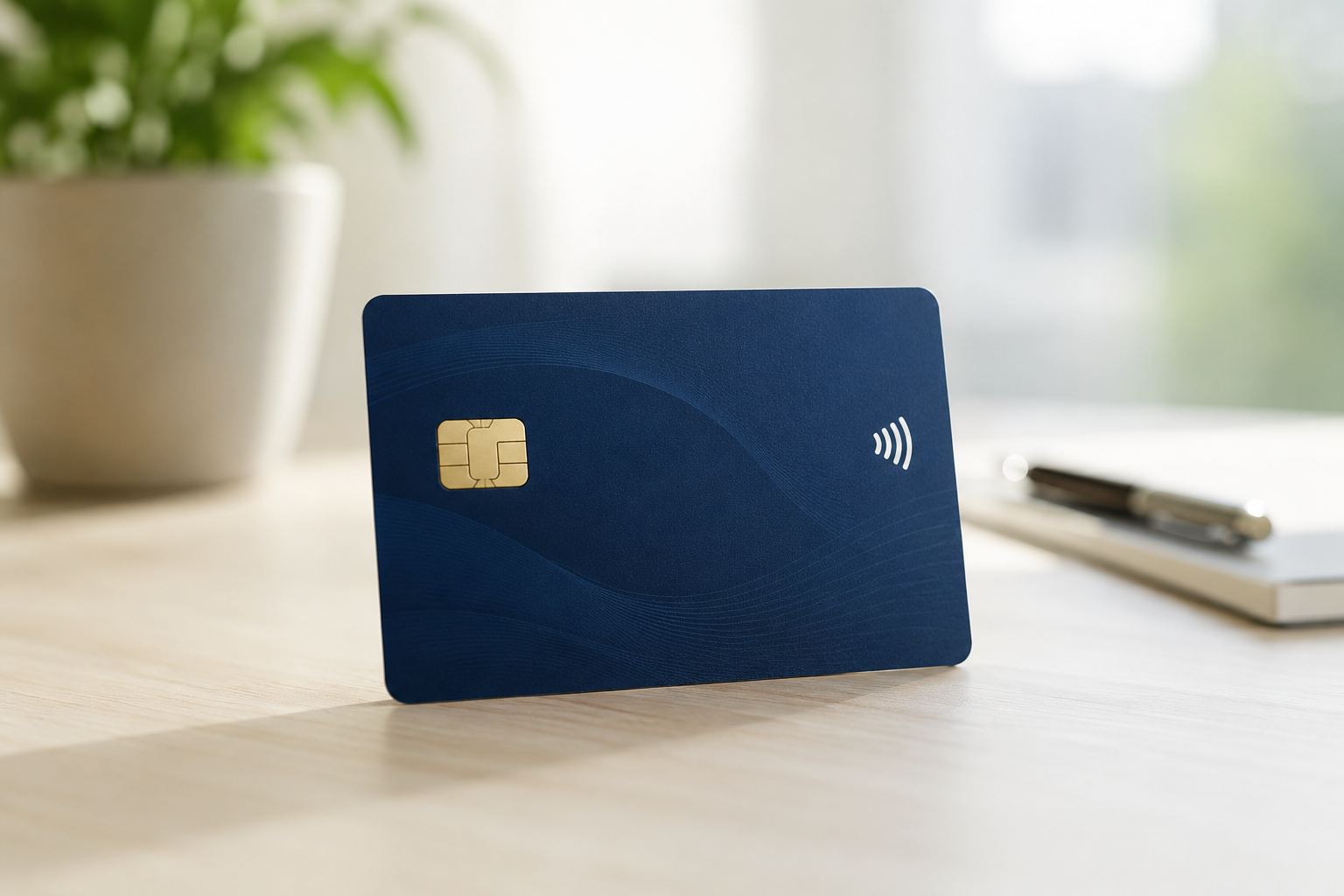
A credit card is a revolving line of credit issued by a financial institution — typically a bank, credit union, or other licensed lender — that allows a cardholder to borrow money up to a pre-set limit to make purchases, pay for services, or in some cases, access cash. Unlike a debit card, which draws directly from funds already in your bank account, a credit card represents borrowed money that must be repaid to the issuer, usually on a monthly billing cycle.
The term “revolving” is important here. It means the credit line doesn’t disappear once you use it — as long as you make payments and stay within your credit limit, the available credit replenishes. So if you have a $5,000 credit limit and spend $1,500, you have $3,500 remaining. Once you repay the $1,500, your full $5,000 is available again.
Credit cards are issued by banks and financial institutions but operate on payment networks — primarily Visa, Mastercard, American Express, and Discover. The network determines where the card is accepted worldwide.
A Brief History of Credit Cards in the United States
Understanding where credit cards came from provides useful context for how the industry operates today.
The modern credit card has its roots in 1950, when Frank McNamara and Ralph Schneider co-founded the Diners Club. The Diners Club Card — initially made of cardboard — was the first general-purpose charge card, usable at multiple merchants rather than just a single store. Early cardholders had to pay their entire balance in full each month.
A pivotal year came in 1958. Bank of America launched the BankAmericard — the first consumer credit card to introduce revolving credit, meaning cardholders could carry a balance from month to month rather than paying it all at once. American Express also launched its first charge card that same year. The BankAmericard eventually became Visa in 1976 after separating from Bank of America. Mastercard was founded in 1966, and Discover entered the market in the 1980s.
Several technological milestones followed: the introduction of the magnetic stripe (which added fraud protection), the rollout of EMV chip technology (a joint development by Europay, Mastercard, and Visa to improve card security), and eventually contactless payment cards and mobile wallet integration — the layer of technology that enables tap-to-pay today.
How a Credit Card Actually Works
When you use a credit card to make a purchase, a sequence of events happens almost instantaneously behind the scenes.
- Authorization: The merchant’s payment terminal sends a request through the payment network (Visa, Mastercard, etc.) to your card issuer asking whether the transaction should be approved.
- Approval or Decline: The issuer checks your available credit, fraud indicators, and other account conditions, then sends back an approval or decline in seconds.
- Settlement: Within a day or two, the actual funds move from your card issuer to the merchant. You now owe that amount to the issuer.
- Billing: Your purchases accumulate over your billing cycle, and at the end of the cycle, your issuer generates a statement showing everything you owe.
- Repayment: You can pay the statement balance in full, pay more than the minimum, or pay just the minimum by the due date.
The Billing Cycle
A billing cycle is typically around 30 days. At the end of each cycle, a statement is generated that shows all purchases, payments, fees, and interest charges from that period. This date is sometimes called the statement closing date.
The Grace Period
After the statement is generated, the issuer must give you time to pay before interest kicks in. Per the CFPB, this grace period is the time between the end of a billing cycle and your payment due date. If you pay your statement balance in full by the due date, you generally won’t be charged interest on purchases made during that cycle. The CARD Act of 2009 requires that, when a grace period exists, the bill must be mailed or delivered at least 21 days before the due date.
It’s worth noting that grace periods typically do not apply to cash advances — interest on those generally begins accruing from the date of the transaction.
What Happens If You Carry a Balance
If you don’t pay your statement balance in full, interest is applied to the remaining balance based on your card’s APR (Annual Percentage Rate). Most credit card issuers calculate interest using a daily periodic rate, which is the APR divided by 365. This interest is compounded daily on your remaining balance, which means carrying a balance can become costly quickly — especially given that average APRs in the US currently sit around 21–22% or higher.
Key Credit Card Terms Explained
The following table defines the core terminology every credit cardholder in the US should understand. These definitions are consistent with those provided by the CFPB.
|
Term |
Definition |
|---|---|
|
APR (Annual Percentage Rate) |
The yearly interest rate charged on outstanding balances |
|
Credit Limit |
The maximum amount you’re authorized to borrow on the card |
|
Statement Balance |
The total amount owed at the end of a billing cycle |
|
Minimum Payment |
The smallest amount you can pay without incurring a late fee |
|
Grace Period |
The window between your statement closing date and payment due date during which no interest accrues on purchases (if you pay in full) |
|
Billing Cycle |
The period (usually ~30 days) over which transactions are tracked before a statement is issued |
|
Cash Advance |
Borrowing cash against your credit line — typically carries higher fees and no grace period |
|
Credit Utilization Ratio |
Your current balance divided by your credit limit, expressed as a percentage |
|
Balance Transfer |
Moving a balance from one credit card to another, often to take advantage of a lower promotional rate |
|
Annual Fee |
A yearly charge some cards assess for card membership, often tied to premium rewards or benefits |
|
Late Fee |
A penalty charged when the minimum payment is not received by the due date |
|
Foreign Transaction Fee |
A percentage-based fee applied to purchases made outside the US |
|
Penalty APR |
A higher interest rate that may apply if you miss payments or violate other card terms |
Types of Credit Cards Available in the US
The US credit card market offers a wide variety of card types, each designed with different use cases in mind. Here is an overview of the main categories:
General-Purpose (Unsecured) Credit Cards
These are the most common type. They require no deposit and are issued based on the applicant’s creditworthiness — meaning credit history, income, and related factors. The CFPB’s 2025 report notes that over three-fourths of the nearly 800 million US credit card accounts are general-purpose cards.
Rewards Credit Cards
Rewards cards offer cardholders points, miles, or cash back for purchases. There are a few main sub-types:
- Cash Back Cards: Return a percentage of spending as cash or statement credits
- Travel Cards: Earn points or miles redeemable for flights, hotels, and related expenses
- Co-branded Cards: Issued in partnership with a specific airline, hotel chain, or retailer
Secured Credit Cards
Secured cards require a refundable security deposit as collateral. The deposit typically sets the credit limit. These cards are designed for individuals building or rebuilding a credit history, as account activity is reported to the major credit bureaus. Some issuers allow cardholders to graduate to an unsecured card after a period of responsible use.
Student Credit Cards
These are unsecured cards marketed to college students who may have limited or no credit history. They often carry lower credit limits and may include features like rewards on everyday purchases.
Balance Transfer Cards
These cards are used to move existing high-interest debt from one card to another, often featuring a 0% introductory APR on transferred balances for a promotional period (typically 12–21 months). A balance transfer fee (commonly 3–5% of the transferred amount) usually applies.
Business Credit Cards
Designed for business use rather than personal expenses. It’s worth noting that the Credit CARD Act of 2009 — which provides substantial consumer protections — does not apply to small business or corporate credit cards.
Store / Private Label Cards
Cards issued in partnership with a specific retailer, usable only at that retailer or its affiliated locations. According to the CFPB, about 25% of all credit card accounts are private-label, store-specific cards. Their overall share of balances is smaller than their account share suggests, as private-label balances have declined significantly since 2018.
The Credit CARD Act of 2009: Federal Consumer Protections
One of the most significant pieces of US consumer finance legislation is the Credit Card Accountability Responsibility and Disclosure Act of 2009, commonly known as the CARD Act. Signed into law in May 2009, it established federal rules governing how credit card issuers can operate — particularly regarding interest rates, fees, and billing practices. The CFPB assumed oversight authority for the Act in 2011.
Here are the key protections the CARD Act established:
- Interest Rate Increases Restricted: Issuers generally cannot raise the interest rate on an existing balance during the first 12 months of account opening. After that, they must provide at least 45 days’ notice before raising a rate.
- No Double-Cycle Billing: The practice of charging interest based on the prior two billing cycles’ average daily balance was banned.
- Payment Allocation: Payments above the minimum must be applied to the balance with the highest interest rate first — protecting consumers from having low-rate promotional balances subsidized by higher-rate purchases.
- Over-Limit Fee Reform: Issuers cannot charge over-limit fees unless the cardholder has explicitly opted in to allow transactions that exceed their credit limit.
- Young Adult Protections: Applicants under 21 must either demonstrate independent income sufficient to repay debts or have a co-signer.
- Consistent Due Dates: Payments must be due on the same calendar day each month, and must be accepted until at least 5 PM on the due date.
- Clearer Disclosures: Statements must include how long it would take to pay off the balance making only minimum payments, and what monthly payment would eliminate the balance in three years.
The CFPB reported in 2015 that the CARD Act helped consumers avoid more than $16 billion in over-limit and late fees in roughly four years after the law’s provisions took effect.
Credit Cards and Credit Scores
Credit cards play a significant role in building or damaging a consumer’s credit profile. The widely used FICO credit score weighs five factors:
|
Factor |
Approximate Weight in FICO Score |
|
Payment History |
35% |
|
Amounts Owed (Credit Utilization) |
30% |
|
Length of Credit History |
15% |
|
Credit Mix |
10% |
|
New Credit (Recent Inquiries) |
10% |
Credit cards affect most of these categories directly. Consistent on-time payments strengthen payment history — the single largest factor. How much of your available credit you’re using (your credit utilization ratio) accounts for another 30%. Having a credit card account that’s been open for many years contributes positively to the length of credit history factor. Applying for multiple new cards in a short period can generate multiple hard inquiries and potentially lower a score temporarily.
The conventional guidance often cited is to keep credit utilization below 30%. According to Experian data from 2025–2026, the average credit utilization rate among US consumers is approximately 29%.
The US Credit Card Market: A Statistical Snapshot
Here is a data-driven picture of the credit card market in the United States as of the most recent available figures from federal agencies and credit bureaus:
|
Metric |
Figure |
Source |
|
US adults with at least one credit card |
~78–81% |
CFPB 2025 / Federal Reserve |
|
Total credit card accounts in the US |
Nearly 800 million |
CFPB 2025 |
|
Total outstanding US credit card debt (Q3 2025) |
~$1.23 trillion |
Federal Reserve / TransUnion |
|
Average credit card balance per cardholder (Q3 2025) |
~$6,500–$6,523 |
TransUnion |
|
Average APR on interest-accruing accounts (Q4 2025) |
~22.3% |
Federal Reserve |
|
Average APR for new credit card offers (2025) |
~23.79% |
LendingTree |
|
Banking industry credit card interest income (2024) |
$174 billion |
Federal Reserve |
|
Cardholders who carry a revolving balance |
~45–50% |
Federal Reserve / CFPB 2025 |
|
Cardholders disputing charges (2024) |
$9.8 billion disputed |
CFPB 2025 |
A few things stand out from these numbers. The gap between those who hold credit cards and those who carry balances is meaningful — roughly half of cardholders pay their balance in full each month, avoiding interest charges entirely. However, for the half who do carry balances, the cost at current APRs is substantial.
Total revolving credit card debt has climbed considerably since the pandemic-era low of around $770 billion in Q1 2021, surpassing $1.2 trillion by late 2024 — a figure that reflects both post-pandemic spending patterns and the lingering effects of inflation on household budgets.
Summary
Here is a recap of the key information covered in this article:
- A credit card is a revolving line of credit that allows borrowing up to a set limit for purchases, with repayment typically due monthly.
- The modern credit card traces its roots to the Diners Club card (1950) and the BankAmericard (1958), the first consumer card to offer revolving credit — which later became Visa.
- Credit card transactions flow through a billing cycle, and paying the full balance by the due date within the grace period avoids interest on purchases.
- Interest on carried balances is calculated using a daily periodic rate based on the card’s APR, which averages around 21–22% for accounts carrying balances in the current US market.
- Credit cards come in multiple types: general-purpose unsecured, rewards, secured, student, balance transfer, business, and store cards.
- The Credit CARD Act of 2009 established significant federal protections, including restrictions on rate increases, over-limit fee opt-in requirements, and fairer payment allocation rules.
- Credit card activity — especially payment history and credit utilization — directly influences a consumer’s FICO credit score.
- As of 2025, total outstanding US credit card debt stands above $1.2 trillion, with an average individual cardholder balance of approximately $6,500.
Sources
- Consumer Financial Protection Bureau (CFPB) — The Consumer Credit Card Market Report 2025
- CFPB — Credit Card Key Terms
- Federal Reserve — Consumer Credit G.19 Statistical Release
- Federal Register — Consumer Credit Card Market Report of the CFPB, 2025
- CFPB — CFPB Finds CARD Act Helped Consumers Avoid More Than $16 Billion in Fees
- LendingTree — 2026 Credit Card Debt Statistics
- Congressional Research Service (CRS) — Credit Cards: Overview
- Experian — The History of Credit Cards
- The Motley Fool — Average American Credit Card Debt in 2025
Disclaimer
The content published on CreditPur.com is intended for educational and informational purposes only. Nothing on this page constitutes financial, legal, or credit advice of any kind. Credit card terms, interest rates, fees, and regulatory information can change at any time — readers are encouraged to verify current details directly with card issuers and official sources such as the Consumer Financial Protection Bureau (CFPB) at consumerfinance.gov. CreditPur.com is not a licensed financial advisor and does not recommend or endorse any specific financial product or service.
Last Updated: June 11, 2026
