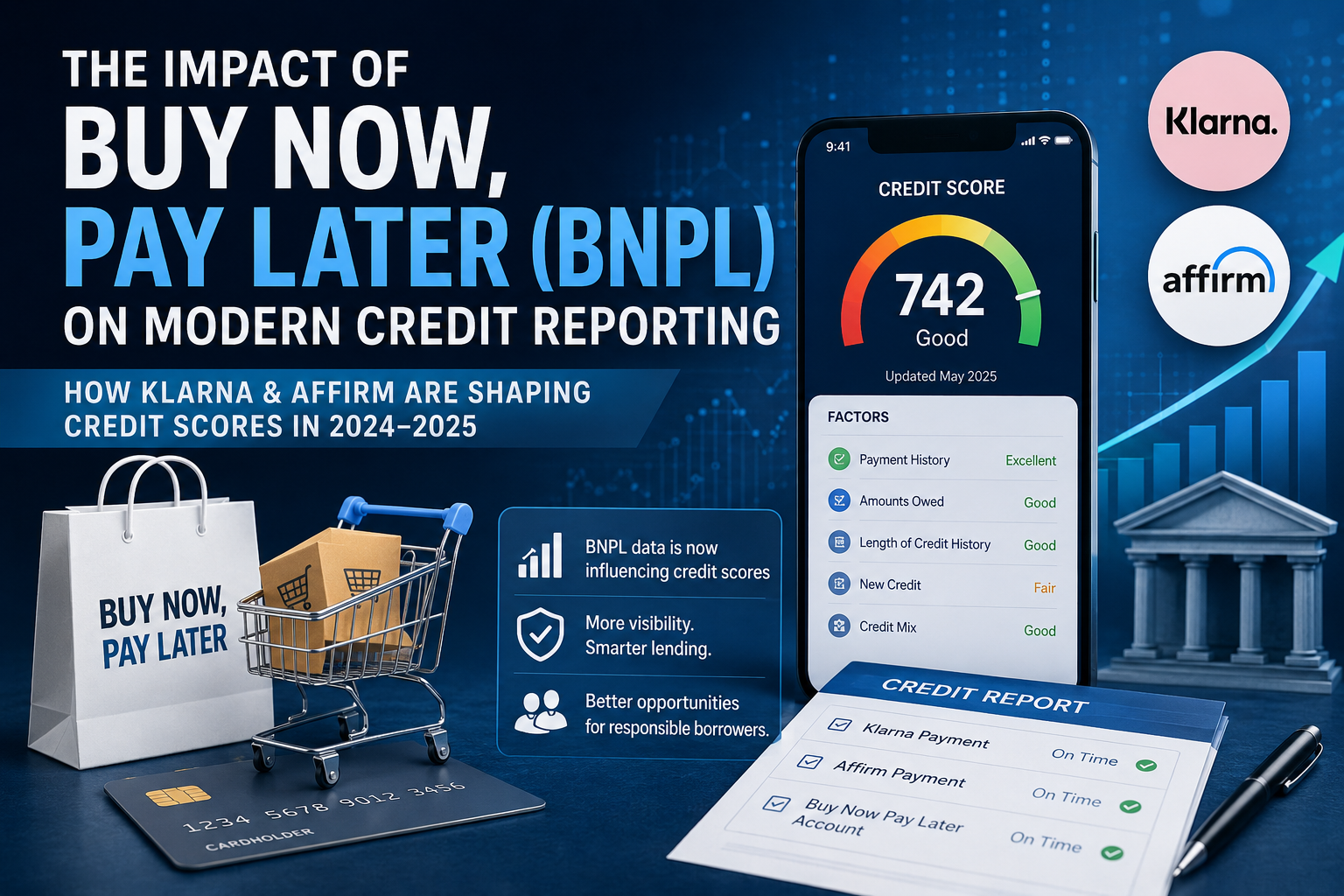
Buy Now Pay Later (BNPL) platforms like Klarna, Affirm, Afterpay, and PayPal Pay in 4 are no longer operating outside the traditional financial system. In 2024-2026, these services began influencing modern credit reporting frameworks, underwriting algorithms, and behavioral risk scoring models across the United States and the United Kingdom.
This shift is reshaping how lenders evaluate borrowers, how FICO 10T interprets repayment behavior, and how consumers strategically manage credit visibility in an increasingly data-driven financial ecosystem.
Introduction
The rapid growth of Buy Now Pay Later financing created one of the largest disruptions in consumer lending over the last decade. Initially positioned as a frictionless alternative to credit cards, BNPL providers offered installment-based purchasing with minimal underwriting requirements and limited credit bureau reporting.
However, the lack of visibility created growing concerns among regulators, banks, and risk analysts. Consumers could accumulate multiple installment obligations without traditional lenders seeing the full picture of their debt exposure.
As a result, major credit bureaus including Experian, Equifax, and TransUnion started integrating BNPL repayment data into modern underwriting systems.
For advanced finance professionals, this change matters because:
- Behavioral repayment data is becoming a core underwriting signal
- FICO 10T increasingly relies on trended repayment patterns
- BNPL activity may influence mortgage and auto loan approvals
- Alternative lending data is reshaping thin-file credit scoring
Prerequisites and Environment Setup
Before analyzing the impact of BNPL on modern credit reporting systems, practitioners should understand:
| Component | Purpose |
|---|---|
| FICO 10T | Uses trended behavioral repayment data |
| VantageScore 4.0 | Incorporates machine learning risk signals |
| Open Banking APIs | Provide real-time transaction visibility |
| Alternative Credit Data | Improves thin-file borrower assessment |
| Behavioral Analytics | Tracks repayment consistency and velocity |
Step 1: Understanding How BNPL Data Enters Credit Reports
The Evolution of BNPL Reporting
Traditional lending models were designed around credit cards, mortgages, and installment loans. BNPL products introduced a new challenge because they were:
- Short duration
- High frequency
- Merchant embedded
- Behavior driven
- Often invisible to bureaus
By 2025, major BNPL providers started sharing repayment information through structured reporting systems.
Current BNPL Reporting Models
1. Soft Reporting
Only missed payments or delinquencies are reported to credit bureaus.
2. Full Tradeline Reporting
Installment plans appear similarly to traditional loans.
{
  "account_type": "BNPL",
  "loan_amount": 500,
  "payment_status": "current",
  "months_active": 6
}
3. Behavioral Data Sharing
Transaction-level repayment data is shared directly with underwriting systems without displaying a visible tradeline.
Modern underwriting increasingly focuses on repayment behavior patterns rather than static credit snapshots.
Why FICO 10T Changes Everything
Older scoring systems analyzed credit reports as static moments in time. FICO 10T introduced trended data analysis, which means lenders can evaluate how financial behavior evolves over time.
This is highly relevant for BNPL because consumer installment activity is sequential and behavioral.
A borrower opening:
- One BNPL account every few months
appears very different from:
- Ten concurrent installment plans within 30 days
Example Behavioral Risk Formula
bnpl_velocity_score = (
monthly_bnpl_accounts * 0.4 +
missed_payments * 0.35 +
utilization_growth * 0.25
)
This type of behavioral scoring is becoming increasingly common across modern underwriting environments.
Step 2: Advanced BNPL Optimization Strategies
Strategic Usage vs Financial Distress
| Strategic BNPL Usage | Distressed BNPL Usage |
|---|---|
| Low account frequency | High repayment fragmentation |
| Predictable purchases | Impulse-driven financing |
| Stable repayment history | Escalating installment usage |
| Controlled liquidity management | Cash flow instability |
The Installment Saturation Problem
One of the biggest underwriting concerns in 2025 and 2026 is installment saturation.
Consumers often underestimate the risk of multiple small repayment obligations.
Modern scoring systems increasingly evaluate:
- Total active installment plans
- Repayment overlap
- Cash flow stress
- Borrowing frequency
Example Saturation Query
SELECT consumer_id,
COUNT(active_bnpl_accounts) AS bnpl_density
FROM repayment_profiles
WHERE status = 'active'
GROUP BY consumer_id
HAVING bnpl_density > 8;
High-density BNPL activity may increase perceived lending risk even when balances remain relatively small.
BNPL and Thin-File Credit Building
BNPL also creates opportunities for consumers with limited credit histories.
Alternative repayment signals may help:
- Younger borrowers
- Gig economy workers
- International consumers
- Credit invisible populations
However, repayment consistency is critical.
Unlike revolving credit cards, BNPL products often tolerate fewer missed payments before risk modeling changes significantly.
Step 3: Open Banking and AI Underwriting
UK lenders are increasingly combining BNPL data with Open Banking transaction feeds.
This allows underwriting systems to evaluate:
- Merchant categories
- Spending volatility
- Cash flow stability
- Overdraft frequency
- Repayment sequencing
Example AI Affordability Model
const affordabilityRisk = {
cashFlowVolatility: 0.35,
bnplFrequency: 0.30,
overdraftUsage: 0.20,
discretionarySpending: 0.15
};
The result is a major shift from traditional debt measurement toward behavioral finance analysis.
Advanced Credit Positioning Techniques
1. BNPL Consolidation Management
Advanced borrowers increasingly limit concurrent BNPL plans to maintain stable underwriting profiles.
- Keep 2-4 active plans maximum
- Avoid overlapping repayment schedules
- Reduce short-term liquidity pressure
2. Repayment Timing Synchronization
Because trended data models track repayment timing, strategic payment scheduling matters significantly.
BNPL Schedule:
- Klarna Payment: Day 3
- Affirm Payment: Day 7
- Credit Card Statement Close: Day 12
This reduces temporary balance spikes and minimizes behavioral risk signals.
3. Merchant Category Optimization
Underwriting systems increasingly analyze the types of purchases financed through BNPL.
High-frequency financing for:
- Fast fashion
- Gaming
- Luxury discretionary spending
may be modeled differently from:
- Healthcare
- Education
- Travel
- Durable goods
Regulatory Landscape
United States
The CFPB increased scrutiny around:
- Affordability assessments
- Repeat borrowing behavior
- Consumer disclosures
- Credit reporting consistency
United Kingdom
The FCA expanded oversight of BNPL providers and affordability frameworks.
Key focus areas include:
- Consumer vulnerability protection
- Financial transparency
- Responsible lending standards
Academic Research and Technical Trends
Behavioral Repayment Modeling
Modern research increasingly focuses on:
- Borrowing psychology
- Repayment sequencing
- Financial dependency patterns
Machine Learning Underwriting
Traditional credit scoring relied on linear models. Modern fintech underwriting increasingly uses:
- Gradient boosting
- Random forests
- Neural network ensembles
BNPL behavioral data provides high-frequency transaction insights that improve predictive modeling accuracy.
Common Issues and Troubleshooting
Issue 1: Credit Score Drops After BNPL Usage
Cause: High account frequency or repayment overlap.
Solution: Reduce concurrent installment plans and improve repayment timing.
Issue 2: Mortgage Approval Delays
Cause: Underwriters may view excessive BNPL activity as liquidity instability.
Solution: Minimize BNPL usage several months before major loan applications.
Issue 3: No Positive Score Improvement
Cause: Inconsistent bureau reporting.
Solution: Use providers that consistently report positive repayment behavior.
Lead Magnet Opportunities
High-Converting Financial Lead Magnets
- BNPL Exposure Calculator
- FICO 10T Optimization Checklist
- Alternative Credit Strategy Guide
- Open Banking Cash Flow Template
- Behavioral Underwriting Audit Spreadsheet
These tools help finance publishers increase conversions while delivering actionable value to advanced readers.
Social Proof Integration Points
To improve authority and conversion performance, integrate:
- Former underwriter insights
- Experian and CFPB datasets
- Real borrower case studies
- Fintech analyst commentary
- Academic lending research
Conclusion
The impact of Buy Now Pay Later (BNPL) on modern credit reporting is accelerating rapidly across the United States and the United Kingdom.
Services like Klarna and Affirm are becoming integrated into next-generation underwriting ecosystems powered by FICO 10T, Open Banking, AI risk analysis, and behavioral finance modeling.
For advanced practitioners, understanding how BNPL repayment patterns influence credit visibility, risk segmentation, and lending decisions is now essential.
Consumers who strategically manage installment activity may strengthen alternative credit signals, while excessive or fragmented BNPL usage could elevate behavioral risk indicators across future underwriting systems.
The future of modern credit scoring will increasingly revolve around behavioral data, repayment sequencing, and real-time financial analysis.